The story of the thirteen North American colonies rebelling against their “mother country,” Great Britain, is deeply embedded in the American consciousness. Even many who struggle to recall the details of the nation’s founding may be aware that French military and financial support proved indispensable to the colonial victory. Yet the story is far more complex.
In fact, Britain possessed twenty-six colonies in North America. Among them was Canada -then known as the British Province of Quebec – which rejected both diplomatic appeals from the Continental Congress and a poorly executed American invasion in 1775 aimed at drawing it into the rebellion. Beyond the mainland, Britain also controlled colonies throughout the Caribbean, as well as East and West Florida.
The roots of the Revolution cannot be separated from the broader struggle for global supremacy among Great Britain, France, and Spain, culminating in the 1763 Treaty of Paris, which formally ended the Seven Years’ War and established Britain as the world’s dominant maritime and colonial power. It severely weakened French influence in North America and forced Spain to cede Florida to Britain in exchange for the return of Havena, Cuba’s principal port, and Manilla, the capital of the Philippines.
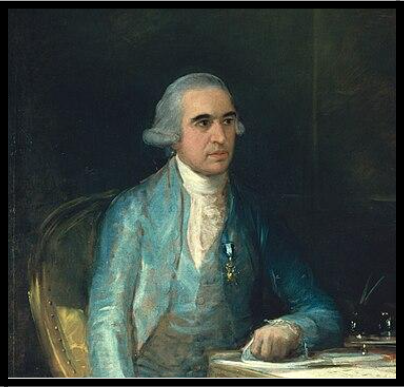
When the American Revolution erupted in 1775, Spain initially remained neutral. However, in 1779, Spain declared war against Great Britain, honoring its alliance with France through the Bourbon Family Compact. Spain’s King Carlos III declared his intentions to expel the British from America and sent a massive expedition to the Caribbean. The following year, Francisco de Saavedra was sent as a special envoy to Havana to oversee all combat operations, including coordinating with the French, who were already heavily invested in treasure and military aid to the American cause
Saavedra planned a successful attack on Pensacola and proposed an assault on Jamaica, a major British naval base, as well as providing funds and forces against the British in Guatemala, Honduras, and Nicaragua. But his most important contribution to the Americans came at the most critical and decisive moment in their struggle against the British.
By late 1780, General George Washington had resolved to drive the British from New York City, which had fallen early in the conflict and remained a British stronghold and a critical supply hub. The commander of the French expeditionary force, the Comte de Rochambeau, proposed an alternative strategy, which Washington ultimately embraced. The plan was for the allied armies to march south and strike British forces in Virginia, where they were more vulnerable, while taking advantage of the French fleet operating in the Chesapeake Bay. It was a brilliant strategy based on a realistic assessment of British troop deployments, effective intelligence gathering, and unprecedented coordination between American and French land and naval forces.
Unfortunately, Congress was bankrupt and unable to pay its soldiers. France had already stretched its finances to the limit and was itself nearing insolvency. The Continental Army suffered from chronic shortages of food, ammunition, blankets, and other supplies needed for the long march from New York to Virginia to confront General Cornwallis. Morale was fragile, mutinies had shaken the ranks, and Continental currency had become nearly worthless. The army desperately needed hard specie to sustain the campaign.
Writing to Lieutenant Colonel John Laurens in France, Washington captured the gravity of the situation: “We are at the end of our tether, and now or never our deliverance must come.”
Robert Morris, Superintendent of Finance, and the French ambassador, Anne-César de La Luzerne, appealed to the Spanish envoy in Philadelphia who relayed their plea to Spanish authorities. Without immediate funds, the campaign, and perhaps the Revolution itself, would collapse.
It was at this critical moment that Saavedra intervened. Acting through Spanish officials in Havana, he arranged a loan to support the American and French forces. In June 1781, he organized an emergency fundraising campaign. Within just two days, more than 500,000 pesos were raised from merchants, landowners, colonial officials, and private citizens. The funds were then transferred through Admiral de Grasse’s French fleet shortly before it sailed for the Chesapeake.
That money helped make the Yorktown campaign possible. At Chesapeake Bay, de Grasse’s fleet joined the allied effort, blocking British relief by sea while American and French forces besieged Cornwallis at Yorktown. The resulting victory proved decisive, effectively ending major combat operations and securing American independence. Saavedra’s timely intervention ensured that the campaign could proceed, making his contribution one of the most consequential foreign acts of support during the American Revolution.
USA250-OC#55