It was warm and humid with intermittent showers as delegates to the Second Continental Congress took their seats in the Assembly Room of the Pennsylvania State House. Thomas Jefferson, who kept a daily record of the weather, had submitted to Congress several days earlier his draft of a paper declaring the reasons why the colonies should be independent of Great Britain. But consideration of his document would have to wait. The issue of independence itself had to be resolved. That would take place today, July 2, 1776.
The vote was uncertain. “The people of the middle colonies (Pennsylvania, Maryland, Delaware, the Jerseys & N. York),” he would later write, “were not yet ripe for bidding adieu to the British connection.” However, he continued, “they were fast ripening & in a short time would join in the general voice of America.” Delegates from New York had not received their instructions and would therefore abstain, leaving twelve colonies whose approbation was required.
Yesterday a preliminary vote had been taken. Nine colonies voted for independence. However, the others were “fast ripening.” South Carolina’s Edward Rutledge asked that the final vote be held today, confident his colony would reverse its decision and vote for independence. If Cesear Rodney would arrive in time, Delaware would also vote “aye.” Only Pennsylvania was left in doubt. Yesterday, its delegates had voted 4-3 against independence.
Jefferson surveyed the room, fixing his gaze on the places where the Pennsylvania delegates sat. Benjamin Franklin was there. Seated next to him was the Scottish American lawyer James Wilson, who had argued forcefully for independence. John Morton was in his seat. Delegates from other colonies were drifting in, but John Dickenson had not arrived, even when the voting began.
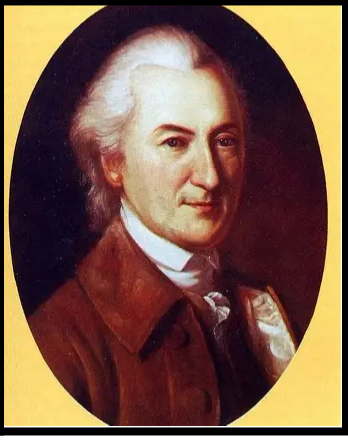
Dickenson’s absence was puzzling. He had been among the first and most vocal critics of the Stamp Act and other onerous acts of Parliament treading on the rights of its North American colonies. During the Stamp Act Congress in New York City in 1765, he had been asked to draft a series of proposals to be sent to King George III condemning the act as unconstitutional – the first official document representing a combination of American colonies.
A year later, Dickenson once again took pen in hand and began to send a series of letters to the Pennsylvania Chronicle. Signed “A Farmer,” twelve letters appeared between late 1767 and 1768, asserting, among other things, that acts of Parliament designed to raise revenue in the colonies were unconstitutional because only colonial assemblies had that power. Letters from a Pennsylvania Farmer were distributed widely throughout the colonies a decade before Thomas Paine’s Common Sense fanned the flames of rebellion. Dickenson’s writings were the first to unify colonial opposition to British policies.
The Letters circulated from Spanish Florida to French Quebec and to England and France where Voltaire compared Dickenson to Cicero. Excerpts were published in Vienna and Poland while British leaders considered punishments for those who would “inflame the minds of the people.” There had been nothing like this in America. But Dickenson was not advocating independence. Redress of grievances, not revolution, was his goal; at least for now, even though military conflict had already taken place at Lexington, Concord, and Bunker Hill. As long as Britain “only sends her own troops to fight us,” he said, “I shall consider the contest only as a family quarrel.” However, he added, if “foreign incendiaries” were hired “to cut our throats,” he would join in “preparing for a Declaration of Independence.”
Throughout the Continental Congress Dickenson continued to pursue reconciliation. In Congress’ final attempt to avoid war with Great Britain, it was Dickenson who drafted the Olive Branch Petition in July 1775. Yet at the same time, he drafted “The Declaration on the Causes and Necessities for Taking Up Arms.” John Adams quipped that Dickenson seemed to be negotiating for peace while preparing for war. He was right, but by the summer of 1776 the tide had turned. Momentum favored independence. Nevertheless, Dickenson remained resolute. “We are not ready for a rupture,” he declared on July 1 as he carefully laid before Congress reasons for continuing the pursuit for reconciliation, fully aware that it would “give the finishing blow” to his integrity and popularity.
If his convictions were so deeply held and his vote could prevent Pennsylvania from voting for independence, where was he? Why was his chair empty? Dickenson himself would later explain. “ A determination [had been] reached upon the question of independence…I was resolved to share, and to stand or fall with her in that plan of freedom which she had chosen.” He would honor his conviction, but he would not obstruct. He would abstain by his absence.
On July 2, the Pennsylvania delegation voted 3-2 for independence. Days later John Dickenson would begin to serve the cause by fighting in the Continental Army, one of only two members of Congress to step forward for military service. History has dubbed him “The Penman of the Revolution.”