
In his new book, In the Name of Freedom, former eleven-season NBA basketball ball player, Enes Kanter, relates his passion for freedom and human rights. Born in Switzerland in 1992 of Turkish parents, he immigrated to the United States at the age of seventeen to play basketball. After completing his citizenship test years later, he was asked by the immigration officer if he would like to change his name. Surprised by the opportunity, he responded immediately. “Yes,” he said, “I would like to change it to Enes Kanter Freedom.” According to Freedom, the officer “teared-up.”
Why would he make such a spontaneous, on-the-spot, life-changing decision? Because, he said, freedom is a “fragile and important word.” He wanted to make it part of himself and to be an example for young people and voice for freedom around the world.
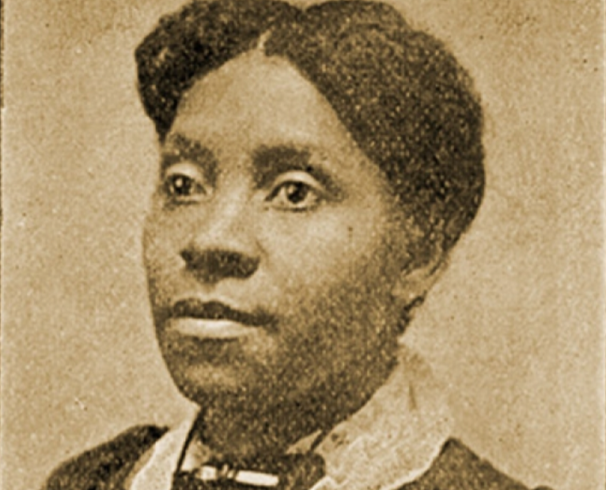
More than two hundred fifty years ago, a black female slave changed her name to Freeman, but she also changed history. Known as “Mumbet,” she was born enslaved around the year 1744 in Columbia County, New York and grew up on the plantation of Pieter Hogeboom. It is believed that when his daughter married Colonel John Ashley, Bett and her younger sister Lizzie were given to the newly married couple who took up residence in Sheffield, Massachusetts.
According to Bett’s friend and biographer, life under Ashley’s wife, Hannah, was not easy; she was considered “mean, nasty and violent in a way that horrified even her white neighbors.” When Hannah raised her arm to strike Lizzie with a heated kitchen shovel, Bett attempted to protect Lizzie by stepping between them, sustaining a serious wound on her arm. As the injury healed, Bett refused to cover it, wanting people to see it as proof of Hannah’s abuse. According to Bett, “Madam never again laid her hand on Lizzy. I had a bad arm all winter, but Madam had the worst of it. I never covered the wound, and when people said to me, before Madam, ‘Why, Betty! what ails your arm?’ I only answered—’ask missis!’”
By the early 1770’s, the people in western Massachusetts had joined the fight for liberty from British taxes and onerous regulations, expressing their grievances in the Sheffield Declaration. Drafted by a committee moderated by Col. John Ashley, the Declaration’s first resolve was that “Mankind in a state of nature are equal, free, and independent of each other, and have a right to the undisturbed enjoyment of their lives, their liberty and property.” The Declaration was approved by the town of Sheffield on January 12, 1773 and published in the newspaper a month later.
Three years later, on July 4, 1776, Massachusetts joined other colonies in declaring independence from Great Britain. This new declaration echoed the Sheffield Declaration, declaring that “all men are created equal” and “endowed by their Creator with certain unalienable rights…to life, liberty and the pursuit of happiness.”
After approving the Declaration, each of the colonies began to draft constitutions to govern themselves as independent states. Massachusetts’s new constitution, drawn up primarily by John Adams and approved in 1780 as the Revolutionary War raged, proclaimed that “All men are born free and equal, and have certain natural, essential, and unalienable rights…”
Although Bett could neither read nor write, she had many opportunities to hear about revolutionary ideas of freedom and equality circulating in her town and throughout Massachusetts. The meeting where the Sheffield Declaration was drafted had been held in a room on the second floor of Col. John Ashley’s home where she served as a domestic servant. Moreover, news and important announcements were read publicly to keep the people informed.
After a public reading of the new Massachusetts constitution in June 1780, Bett decided to act. Approaching a young attorney for his counsel, she said, “I heard that paper read yesterday, that says, all men are created equal, and that every man has a right to freedom,” and questioned why “won’t the law give me my freedom?”
Theodore Sedgwick was already an activist in the cause for independence and had been among the eleven who had drafted the Sheffield Declaration in 1773. He readily accepted her case, added an enslaved man named Brom as a plaintiff, and argued that slavery violated the new Massachusetts constitution’s provision that “all men are born free and equal.” A jury agreed, finding in favor of Bett and Brom and awarding them damages, including court costs and compensation for their labor.
Bett was not only the first African American to be set free under the Massachusetts constitution. Her case led to the decision by the Massachusetts Supreme Judicial Court a year later to declare slavery unconstitutional in Massachusetts, citing Bett’s case as precedent.
After gaining her freedom, Mumbet changed her name to Elizabeth Freeman and was hired as an employee in the Sedgwick household. She also worked as mid-wife and healer, earning enough to purchase a home for herself and her children. She lived as a beloved member of the Sedgwick household until her death on December 28, 1829, and is buried in the Sedgwick family plot. Her biographer was Catherine Sedgwick, Theodore Sedgwick’s daughter, who considered Elizabth Freedom to be her “second mother.”
“Any time, any time while I was a slave, if one minute’s freedom had been offered to me, and I had been told I must die at the end of that minute, I would have taken it – just to stand one minute on God’s earth a free woman – I would.” – Elizabeth Freeman.